Hi there! I’m Alasdair, the newest Ditch Digger. I’m a Hugo finalist this year for Best Fan Writer, I co-own and run Escape Artists, the oldest genre fiction podcast network on the planet, I’ve written for numerous organizations, was once the voice of a vocabuvore, and am currently playing the unsung hero of The Magnus Archives.
Honestly he is. I checked.
All of which means two things: that I’m uniquely equipped to write about the genre fiction space as a business, and that I don’t say no to the word ‘work’. Which is good, given that podcasting at the moment is going through Interesting Times. Want to know how interesting? This literally hit my inbox as I finished the first draft of this paragraph:

Find the rest of the very good article here.
So let’s break this down. First off, Luminary is a new podcast streaming platform that launched a few months ago with a ton of exclusive titles and a ton of money, very little of which they seem to have spent on a public relations department. The idea is that they are ‘the Netflix of podcasts’, which presumably doesn’t mean:
‘We’re sustained by the physical library system that no one expected to live this long and it takes two years for us to get the new season of Brooklyn Nine-Nine’.
Instead, the idea is that Luminary will feature forty or so podcasts which are only available through it’s app, most of which are fronted by celebrities.
How you feel about this really depends on how you feel about ‘famous person has some thoughts’ style shows. I could live my entire life without hearing what professional opinion havers like Russell Brand think about anything, ever but there’s a definite audience for these shows and its not to be taken lightly. What I tend to care about more are scripted audio dramas which brings me to The Bright Sessions, The AM Archives and the can of worms.
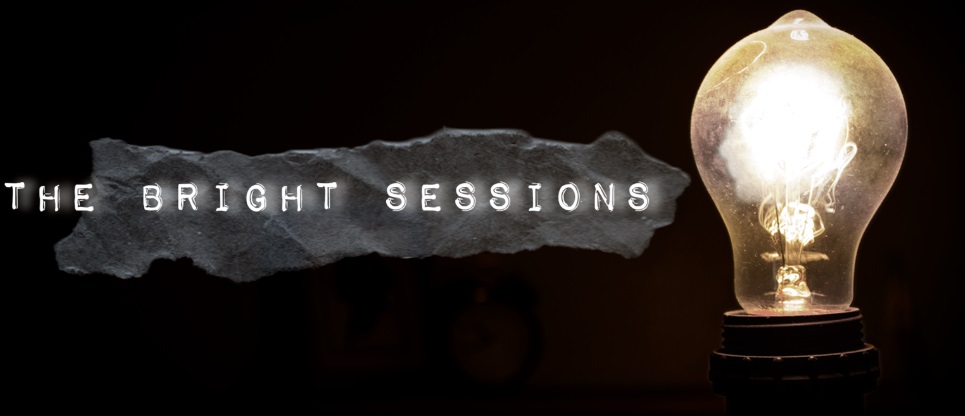
The Bright Sessions, created by Lauren Shippen, is a startlingly good series best described as ‘In Treatment’ crossed with ‘Alphas’. And for the five people reading who saw both shows, know I am high-fiving you all right now. A psychologist treats a group of teens who, it becomes apparent, all have superhuman abilities and all of whom are in serious trouble. It’s an extraordinary show, using format as a storytelling tool, crammed full of excellent writing and acting. It’s massively (and deservedly) popular.
The AM Archives is the sequel and you can only hear it on Luminary. One is free, the other is behind an eight buck a month paywall.
Hence the worms.
But here’s where things get interesting. Lauren has been very open about her experience with Luminary and what it’s allowing her to do. Namely, pay her people fairly and secure the resources to make future shows.
In other words, that ticket price is being reinvested into the future of the creatives subscribers are paying to hear. Which, on paper, is great right? Hell yes, it’s even necessary and years over due BUT, the manner in which it’s coming to the fore is just one of three full-on conflicts raging in podcasting at the moment.
Pay vs Free
Himalaya have thrown $100 million at their podcast content. Spotify are essential Borg collectiving their way around the industry and picking a massively ill-advised fight with Apple. Luminary are attempting to be the velvet-roped VIP area for particular types of shows. So basically, podcasting is already becoming Pay on the Door versus walk in. Based on most responses I’ve seen, no one is happy with paying on the door, especially given the entire industry has been built on ‘Take this, it’s free!’ since its inception.
But that model has a single, massive problem. Every podcaster I know, myself included, works based on donations. We are an industry of Blanche Dubois, relying on the kindness of strangers. Strangers are, in fairness, very generous — but as a business model it’s far better suited to continuity than it is to expansion. Donations allow you to hold, and push the red line a little. External funding allows you to paint the line on a building across town that you just bought.
OR DOES IT?
Venture Capitalists vs Your Money
We’ve owned Escape Artists for something close to five years and I’ve lost count of the amount of times I’ve gazed covetously at Venture Capitalist funding. It’s what allowed both Twitter and Patreon to launch, it gives you a cash injection and all you have to do is pay it back, plus extra, a couple of years later. Which is fine as long as you’re not in an inherently mercurial constantly changing sub-field of the creative industries, right everyone!
Hey wait, where’d you go?
Damn it.
VCs are the questing beast of podcasting, but maybe they shouldn’t be. The ongoing problems at Patreon can be traced directly back to the fact they’re VC-funded. Roughly 33% of the eternal garbage fire that is Twitter, much the same. The moment you get VC backing, your project is no longer yours. Or at the very least it’s buying that building across town with someone else’s money, knowing full well if you can’t afford to pay them back, you don’t get to work there anymore.
Luminary is entirely VC funded. That means that their VCs are going to want returns on that investment, and soon. That means they move fast, they’re abrasive and because no one EVER thinks to actually throw money and people at a PR problem, right now they’re the biggest asshole in the industry, loudly yelling about how great they are while everyone else just keeps talking around them.
Commissioned vs Extant Content
This shouldn’t even be a thing. But, this is the fight Luminary’s PR, unwisely, tried to pick a few weeks ago. Going deeper, it’s the fight that everyone who’s asked for their shows to be taken down has been dragged into. This isn’t just a licensing or user data issue, although that’s a part of it. This is a company whose fundamental misunderstanding of the industry they’ve vowed to ‘disrupt’ has caused their reputation instant, massive backlash.
Luminary has been accused of deleting show notes and donation links, hiding their requests behind proxies, and have done a textbook impersonation of the guy who thinks it’s hilarious to loudly praise steak in the middle of the vegan supermarket. As a result, everyone from the Joe Rogan Experience to PRX, the producers of Welcome to Nightvale have asked for their content to be taken down. All because Luminary decided the best way to turn the podcasting industry their way was to kick people and then demand applause.
While they’ve walked back some of these actions, their two-months-early launch week could fairly be called disastrous. While Luminary right now are one of the only deep pockets in the game, their professionalism and media strategy is being lapped by companies with two staff and none of their capital. Which given how they’re funded, is not a good sign of things to come.
This leaves podcasting in the middle of its version of one of those CSI montages where EDM blasts and people glower at test tubes. The industry is years late on having the ‘Is it okay to be paid for this?’ conversation, and I hate that it’s being forced to life this way. But it needs to be had if podcasting is going to grow as a creative industry and avoid the massive spiked pits every other creative industry has fallen into. We’ve got to have this conversation. And maybe glower into the odd test tube, if it helps.
So what can you, and I, as individual writers learn from this hilarious Katamari Damacy ball of other people’s egos, ‘let’s do the show right here!’ attitude, and, somehow, Axe body spray?
- If you’re working in any creative space and you don’t have contracts with everyone you work for and with, get them. Immediately. Stop working if you have to and if you’re providing the Intellectual Property ABSOLUTELY stop working until who holds what rights for how long is written down and agreed upon. A Gentleman’s agreement is never made by a Gentleman. A handshake means NOTHING. Get contracts. Get a paper trail. Sleep better as a result.
- If you’re running a podcast already, then odds are you’ve already got some kind of donation system in place. Get another one. ‘Two is One, One is None’ is the order of the day here. Most of them run through PayPal (like Ko-Fi), but there are other options available. If there’s interest, I’ll happily dig into which ones do what in a later column. For example, EA runs with PayPal and Patreon, and that works well.
- Prepare for Success. Seriously, it happens. If your show takes off, in the current climate there’s a non-zero chance Johnny Capitalism is going to pull up to your Twitter feed with promises of money, success and movie deals. If you’re not ready for that, if you don’t know what rights, if any, you’re willing to licence and on what terms, that opportunity may slip away.
This is a really exciting time to be in podcasting and my definition of ‘exciting’ does include ‘AAAAA!!!’ in this instance, yes. If you can make smart, thoughtful choices early, you’ll be fine and maybe even better than fine. If not, batten down the hatches until the present wars blow over. Because whether it’s Spotify, Luminary, or Apple in charge doesn’t matter — what matters is keeping your show alive and ready to take advantage of what comes next.
And that’s the ditch I’m digging this month.
 Ditch Diggers is brought to you in large part by my patrons, who received an early version of this episode. You can join our Fabulist community with a pledge on Patreon as low as $3 a month! You can also support at Ko-Fi! The rewards may vary slightly, but all get the archive and bonus episodes!





 “Dirt Butlers with Alasdair Stuart” is brought to you in large part by by our patrons, who received an early release of this episode. You can join our Fabulist community with a pledge on

 Hugo-finalist fan writer, nonfic writer, and fiction writer
  Matt is still gone, but has sent us a bloody fang as proof of life. Don’t ask me, I don’t control the boy.