Projects

Guest Post: How to Defeat the Procrastininjas

Freelance writer, novelist, award-winning screenwriter, poker player, poet, biker, roustabout, Travis Heermann is a graduate of the Odyssey Writing Workshop and the author of The Wild Boys, the Ronin Trilogy and Rogues of the Black Fury, plus short fiction pieces in anthologies and magazines such as Weird Tales, Historical Lovecraft, and Shivers VII. As a freelance writer, he has produced a metric ton of role-playing game work both in print and online, including Legend of Five Rings, d20 System, and the MMORPG, EVE Online.


They are masters of stealth. You never know they’re there, but they’re right behind you every single time you sit down in front of a computer screen or a blank page.

They are masters of deception. Things are never really as they seem.

They are masters of disruption. They throw all your best efforts into complete disarray. Without breaking a sweat, they’ll set fire to your meticulously constructed castle and throw your ideas, your schedule, and your psyche into chaos.

They are masters of psychology and asymmetrical warfare. They know exactly what makes you tick, how to press your deepest, most sensitive buttons, and they know precisely how to strike at those weaknesses for greatest damage.

They are, without question, the writer’s arch nemesis. Even worse than the literati who thinks your beloved genre of fiction is utter crap, or the editor who ignores your queries for 18 months, or the agent who won’t give you the time of day, or the book reviewer who is so clueless that his capacity for perception and insight rivals that of a paramecium, there is one enemy who stands in the way of your dreams more staunchly, steadfastly, implacably than all others.

Yourself.

As a quick For-Instance, since I sat down to write this article about procrastination, I have gone off to surf Facebook, email, and Twitter no less than three times each. Mix that in with running a Kickstarter campaign right now, which is its own special mix of terror and elation, and I’m getting mighty little accomplished.

Because it’s so easy! And I want to hear about stuff! And I’m organizing for cons this year! It’s work! And I have to tweet!

And then I get sucked into cat photos and clever memes, or fly into a spasmodic, spittle-flecked rage about some asinine political story and have to spend the next several hours blasting Enya into my skull, kicking the heavy bag, and breathing incense in a sensory deprivation chamber with half a bottle of Lagavulin 16 to feel like a human being again.

But I digress.

Oh, and there’s laundry.

And the kids!

And oh! Dishes!

And that magazine I haven’t read.

And the cat needs a perm.

You don’t need me to give it all a name. You know it already. You know it just like you know the ninjas in the dark, the ones that your mind creates to fill the emptiness of shadows. Ninjas resist names; they are shadow itself.

And they come from the places that are already inside our defenses. From our own internal resistance. I’ll go out on a limb and say that all writers possess an innate fear of success. We yearn for validation, for publication, for having created some work of art that sets readers on fire with emotion and inspiration. We just don’t want to work on it right now.

Because if we don’t work on it right now, it will never be finished.

If it’s never finished, then we don’t have to worry about whether it’s any good.

No one will ever be able to tell us, “Wow, this is awful. Are you a native English speaker? Did you steal this plot from Twilight?

No editor or agent will ever be able to send us an empty, soulless rejection.

If we never finish this project, we don’t have to worry about how it will be received, or how hard it is to get it published, or whether our mothers will lose sleep over what they did to make us so sick and twisted.

For these reasons and others, we get in our own way when it comes to bringing to screaming life these critters within us we call stories and books. No one knows you better than your subconscious mind; therefore, the ninjas lurking in those depth are preternaturally adept at bringing your work to a crashing halt.

But here’s the most important thing to remember. The stronger your internal resistance, the more important this project is for your career or creative well-being. The greater the multitude of ninjas that emerge from the shadows to stand in your way, lead you astray, the more vital it is for you to fight your way through them, wrap your fingers around the pen or keyboard, and get busy. If you have reached the point where you just cannot make yourself work on that novel again, ask yourself, “Could this be the most important thing I have ever done?”

And listen to the little voice for the answer, not the big one.

If the answer is “Yes, this is important!” how do put the ninjas to rout?

First, you must identify where the time is going. I just spent thirty minutes on e-mail, Facebook, and Twitter without even trying. Just now, and you didn’t even see it go.

Hmm, perhaps a theme is emerging…

If the internet is your biggest procrastination tool, and you recognize it as such, do you have the internal fortitude to disconnect? How about just for a little while? And this includes smart phones. If have even 30 or 45 minutes to write, then make that time sacrosanct. Turn off the phone, and disconnect your Wi-Fi. If even that is not enough, there are tons of simple programs out there that will disconnect your computer from the internet for a set period of time. Or put the computer away, loosen up your wrist and try writing in a notebook. Besides, you look more like a writer carrying around a tattered leather journal. It’s cool, trust me.

Some fascinating new research from Harvard professor Dr. Shelly Gardner also shows that the more pressure you are under to produce, the more your brain’s creativity centers kick in. People are often just as productive when they have only fifteen minutes to write (or five!) as those who have two hours to stare at a screen. So find little blocks of time to bang out a couple of paragraphs.

Another key ingredient to a little bit of self-care. Don’t get too down on yourself for getting your ass kicked by the ninjas again. Just get up, dust yourself off, and say, “Yeah, you guys got me this time, but hey, you’re trained for it, and you’ve had my whole lifetime to practice. I’m just a writer. And now I’m going to do that. Next time, you might not get me.”

Thank you for coming along, dear reader. All writers, even the pros, and creative people in general, struggle with these things, so you’re not alone. You’ll never kill all your personal ninjas, but you can learn to circumvent them. That’s what successful writers have to learn to do.

I’m running a Kickstarter campaign until February 4, 2013, to fund the publication of the second novel of my RoninTrilogy. There are plenty of ninjas over there, along with samurai, demons, Mongols, magic swords, and talking animals. If this sounds like your kind of thing, or even if you enjoy supporting independent artists, please give it a look by clicking here.
Personal

The writing career and all the moneys

One time I got a feedback email from someone who said that he had been laid off and wanted to start writing “to make some money.” And I wanted to cry.

My first writing paycheck was $300 and it was paid about a year after I got the initial assignment. (It was for RPG writing, and it paid on publication.)

And I know someone out there is going to say, “Heck, MY first paycheck was an “attaboy!” and a dirty sock that smelled like despair and cheese” – I know $300 was more than a lot of people get, but I think we can all agree that if you need money now and you start writing and you get paid 9-12 months in the future, you’ll be dead of starvation or dysentery long before that fat three hundred rolls in.

I’ve not been one to offer transparency with my income- I’m not comfortable doing so, and I seem to remember Carrie Vaughn writing an interesting comment about how it’s different for a woman revealing income, which I quite liked, but now can’t find it to quote it properly, so I apologize if it wasn’t, in fact, Carrie who said it.

But I do appreciate it when others do. And I’ll get to that in a moment.

I will offer a little breakdown of a book deal, and why when you hear someone got a $100,000 book deal, it’s not as awesome as you think.

Publishers Weekly: Jane Q. Author received a $100,000 book deal!

John Q. Wannabe: Dang, I only make $40,000 a year at my crappy job! I wish I could get that kind of fat money for writing!

Fact- This is a three book deal. So it is, in a way, three $33,333 deals. (In a way it is a $100,000 book deal, which I will also get to later.) Jane will get 1/3 of each book on signing, 1/3 on delivery of each final draft, and 1/3 on each publication.

  • Jan 1, 2013: Signing of the contract! Check to agent: $33,333 (breakdown- this is the signing payment, 1/3 of the advance for three books at $11,111 per book.)
  • Check to author: $28,333 (minus 15% for agent)
  • March 1, 2013: Book one is done, so after a few edits, final draft is turned in. Check to agent: $11,111 (Book 1 final draft – 1/3 of $33,333)
  • Check to author: $9,444 (minus 15%)
  • Book 1 won’t come out till spring 2014. Jane works on Book 2 and cross over into 2014.
  • INCOME FOR YEAR ONE AS AUTHOR: $37,777 — and that’s before taxes. 
  • March 1, 2014: Book 2 final draft. Check to agent, $11,111 (book 2 final draft)
  • Check to author, $9,444 (minus 15%)
  • May 1, 2014: Book 1 comes out. Yay! Jane is a Real Writer (TM) Check to agent: $11,111 (Book 1 now paid in full)
  • Check to author: $9,444
  • Writing commences on book 3. We get to a new year again.
  • INCOME FOR YEAR TWO AS AUTHOR: $18,888 – before taxes
  • May 1, 2015: Book 3 hits final draft $11,111 to agent
  • $9,444 to author
  • June 1, 2015: Book 2 comes out: $11,111 to agent (Book 2 paid in full. Didn’t feel like $33k did it?)
  • $9,444 to author
  • INCOME FOR YEAR THREE AS AUTHOR: $18,999 – before taxes
  • March 1, 2016: Book 3 comes out. $11,111 to agent (Book 3 paid in full)
  • $9,444 to author
  • INCOME FOR YEAR FOUR AS AUTHOR: $9,444

In four years, even without a cost of living raise, John Q. Wannabe made $120,000 before taxes.

Jane Q. Author made $85,000 before taxes.

Wanna know the worst part? If Jane earns $40,000 on book 1, and $35,000 on book 2, and only $20,000 on book 3 (total of $95,000, which is less than $100k) – she will not earn royalties on books 1 and 2, even though she made over $33,333 on each, because the full advance of $100,000 hasn’t been reached.

Suppose her books do well, something we all hope for. Once those advances earn out (for a total of > $100k)  she will start earning royalty checks and those will be paid every quarter or every year. That is, as I understand it, how authors make regular money. That and frequent book deals of course.

(My nonfiction book with Que that I wrote in 2006 pays monthly, a fact I would be much more excited about if I had earned out the advance. Now I just get an email every month saying, “Yep. No sales this month.” Only they do it in publishing speak with attempts to show me mathematically how the book has sold no copies.)

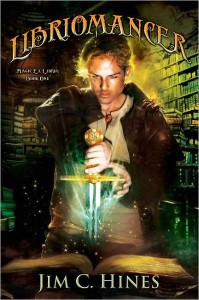
Now, as I said, I am not comfortable giving out my numbers (I am not a thinly veiled Jane Q Author- I did not receive a 3 book deal, nor did I receive $33,333 per book.) But some authors are comfortable, and the information is helpful and illuminating. John Scalzi recently broke down his income percentages for Redshirts to commemorate the launch of the paperback version. And Jim C. Hines recently gave a pie chart of his yearly income as a writer. (Please note that Jim also has a day job.) I urge you to look at both of these blog posts to discover why writing is not a quick path to streets paved with gold.

Anyway, the numbers are sobering, even the magical “six figure advance.” This is why being a writer depends on persistence, because even if you work you butt off to get that first deal, you still have to keep busting ass to make it to a place where you’re making a living wage.

I’m still in. Go eagle go!

Podcasts, Projects

ISBW 270- Podcasting Your Work, LIVE at Stonecoast with James Patrick Kelly

One of my favorite guest stars, Jim Kelly, and I did a presentation on podcasting as another form of self publishing at Stonecoast, and part of the presentation was a live ISBW in front of the audience. Thanks to everyone for being a great audience, and thanks to Jim!

Podcasts, Projects

At Long Last, the Magic Spreadsheet!

I interviewed Tony Pisculli about the “Magic Spreadsheet” the only thing in the entire history of history that has gotten me to write every day since Dec. 3 (nearly 24000 words). I’ve written on sick days, travel days, residency days, and holidays. It may not work for everyone but it’s sure as hell worked for me. So here’s a short interview of Tony and I walking and talking about the magic spreadsheet (hence the change in background noise) and below is the link to the magic spreadsheet. Add your name at the bottom (and if you feel like it, put ISBW next to your name so I can follow who’s tracking) and start tracking! And it goes without saying, but don’t mess with anyone else’s numbers.

The Magic Spreadsheet — UPDATED LINK AUG 12, 2014

Personal

That award post

Some like the award posts, some don’t, but I’m of the opinion that if you don’t tell people you’re out there, how will they know? So here’s what I’m eligible for this year. Vote as your conscience tells you to.

Campbell Award for Best New Writer (not a Hugo)- my second (and last) year of eligibility. I’ve gotten permission to put part of The Shambling Guide to New York City in the Hugo packet, so I’ll have more to showcase than a wee little (but still pro) story of 1500 words. Sorry, this isn’t happening, folks. Will see what I can do.

I Should Be Writing – Best Related Work

And, uh, I think that’s it. I worked on a lot of work for hire stuff, school stuff, and the next book. I know I was busy… I would like to mention that even though I’m no longer editor, Escape Pod is still eligible for semi-pro zine.

So if you were a member of ChiCon or are a member of Lonestar Con (or you’d like to be a supporting member and get a TON of the best SF and Fantasy ebooks for the membership price of $50) you can nominate for the Hugos and Not-A-Hugo!

(Incidentally I found out this morning I’m nominated for the Above and Beyond Award, for writers who have done things for the writer community, which will be announced later this month. I think it’s a juried award, so there’s nothing to do/promote, only to say, that’s kind of cool! Thanks to whoever wrote about me!)


Personal, Travel

I return triumphant!

I’m back from my third Stonecoast residency, where in theory I was finally supposed to know what I was doing. I did a talk on podcasting with James Patrick Kelly, which was pretty damn cool, and we got some good feedback. (I recorded it, it will go live soon.) I workshopped a short fiction piece that takes place 50 or so years before The Shambling Guide to New York City, then workshopped the first chapter of book 2, tentatively titled Ghost Train to New Orleans. 

I have learned that sequels are hard.

I’m going to be working on my third semester project over the next six months, and finishing a book, and doing freelance work, so if you see me playing with my phone, knock it from my hand and watch me cry. Or at least ask me if I’ve done my wordcount for the day.

It was a strange residency in some ways, but I’m excited about my work over the next six months, especially working with my mentor, Nancy Holder. I’ll write more about my project when I’m closer to finishing. I may need some beta people to look at it, so I’ll be putting a call out later.

The friendships and connections I have made at residency were cemented further. It’s really great to connect with people who may not even write anything close to what you do, and still connect on the angsty writer level. On our day off, we had a presentation about life after Stonecoast, what do you do when you graduate and don’t have a workshop to look forward to in six months? The response among the students was all over the map – some thought about the end with horror, others felt reassured that “post-Stonecoast blues” happens to everyone, and others even looked forward to returning to a solitary writing life.

Personally, one of the reasons I chose Stonecoast over Clarion or Clarion West (I weighed many, many things, I may blog about it someday, but this was one of them) was I’d heard the intense “boot camp” feeling of six weeks of workshopping at Clarion can overwhelm a writer and many stop writing for months when they are done. They have to process everything they learned and they miss their Clarion friends and teacher. Stonecoast is an intense 10 day residency every six months for a total of 5 residencies, bookending a two year program. Coming home after a residency is always a bit of a shock but I usually jump right back into writing. It’s very similar to post-con letdown, which I experience several times a year. I was hoping that spreading out the experience over two years would allow for gradual absorption of what I was learning and lessen the shock when it was over. I fully expect to get bummed in July of 2014 when it’s not my turn to plan to go to Maine. But I’m also excited to graduate.

(And am I the only one who thinks that the family stress, travel stress, and expense of continuous semi-annual residencies would overwhelm one after a few years?)

Anyway, nothing very good or very bad lasts for very long. Enjoy the ups, tolerate the downs, and remember what Dennis Leary said about happiness:

Happiness comes in small doses, folks. It’s a cigarette butt, or a chocolate chip cookie or a five second orgasm. You come, you smoke the butt, you eat the cookie, you go to sleep, wake up and go back to fucking work the next morning, THAT’S IT!

Hopefully I can view the end of Stonecoast with that attitude.

Lastly, I’m hearing that many people came down with con crud (residency crud?) upon arriving home. I remain healthy and apprehensive.